
Stretching for Recovery and Mobility
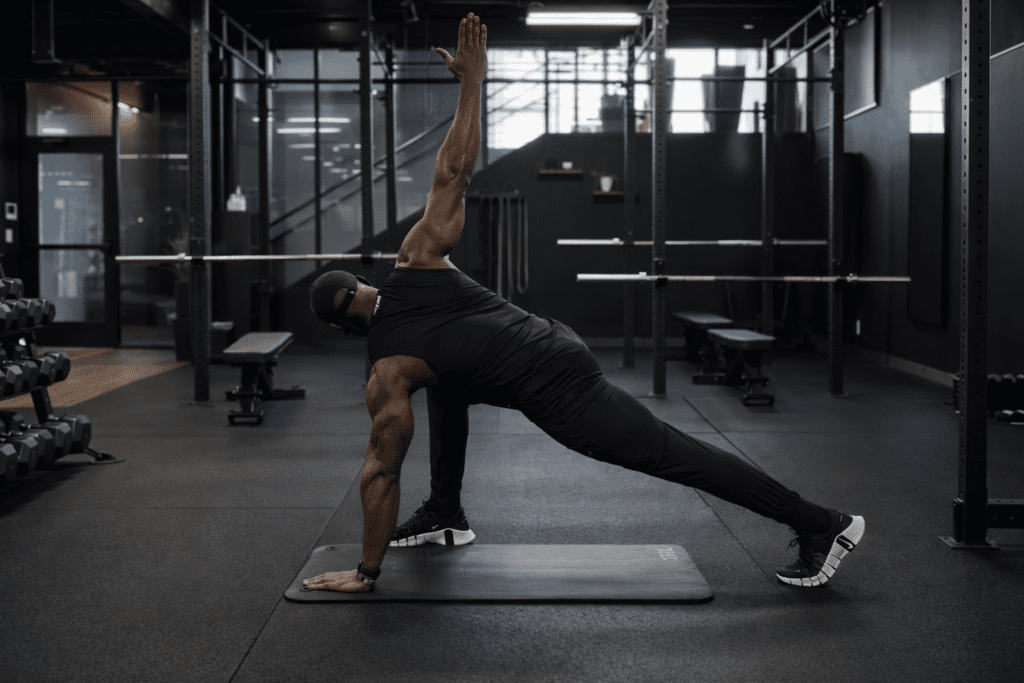
Stretching is often one of the most overlooked components of a well-rounded fitness routine, yet it plays a critical role in recovery, soreness reduction, flexibility, and long-term mobility. Whether you’re strength training, doing cardio, or simply trying to move better in daily life, consistent stretching can significantly improve how your body feels and performs.
How Stretching Supports Muscle Recovery
After exercise, muscles experience microscopic damage that leads to soreness and stiffness. Stretching helps increase blood flow to working muscles, delivering oxygen and nutrients needed for repair. Improved circulation supports faster recovery and helps flush out metabolic waste that contributes to delayed onset muscle soreness (DOMS). While stretching won’t eliminate soreness entirely, it can reduce tightness and improve comfort between workouts.
Reducing Muscle Soreness and Tension
Tight muscles can limit movement and increase the risk of injury over time. Stretching helps release built-up tension in the muscles and connective tissues, promoting relaxation and improved muscle function. Regular stretching after workouts or on rest days can help decrease stiffness, improve posture, and make everyday movements feel easier.
Improving Flexibility
Flexibility refers to a muscle’s ability to lengthen through its full range of motion. Without regular stretching, muscles can shorten and become restrictive—especially with prolonged sitting or repetitive movement patterns. Dynamic stretching before workouts and static stretching after exercise can gradually improve flexibility, allowing your body to move more freely and efficiently during training and daily activities.
Enhancing Mobility and Joint Health
Mobility goes beyond flexibility—it includes strength, control, and joint range of motion. Stretching supports healthy joints by maintaining proper muscle balance around them. Improved mobility can lead to better squat depth, improved overhead movement, and reduced stress on the knees, hips, shoulders, and lower back. This is especially important for long-term joint health and injury prevention.
Stretching for Long-Term Performance and Longevity
As we age, mobility and flexibility naturally decline. A consistent stretching routine helps preserve movement quality, reduces the risk of chronic pain, and supports active, independent living. When paired with strength training, stretching creates a foundation for sustainable fitness and long-term physical resilience.
Make Stretching Part of Your Routine
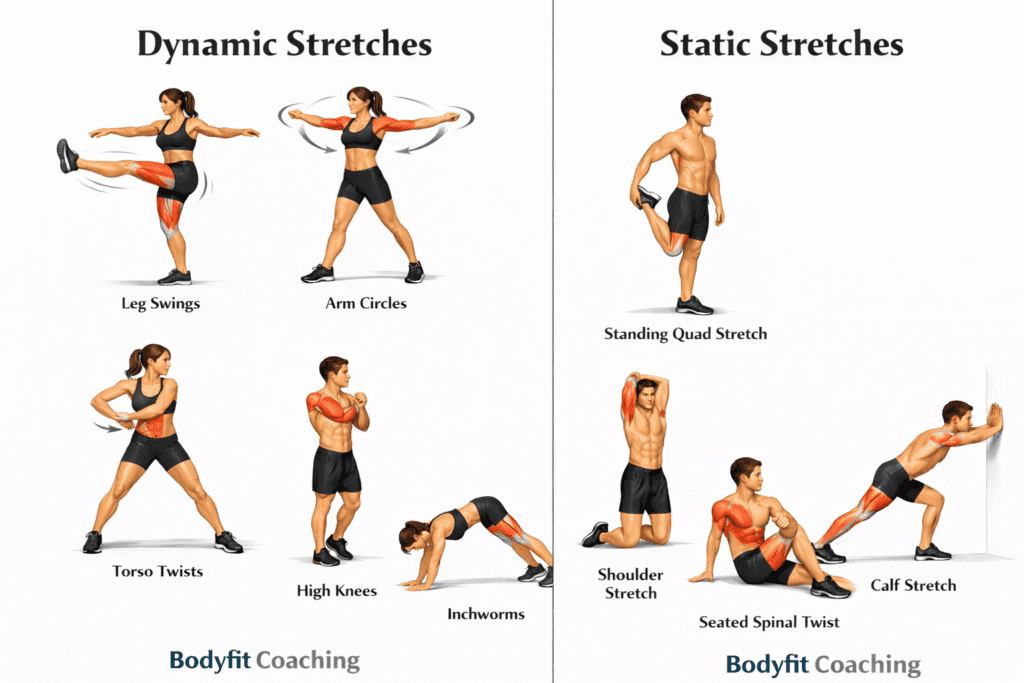
For best results, include:
- Dynamic stretching before workouts to prepare the body
- Static stretching after workouts to aid recovery
- Mobility-focused stretches on rest days to maintain joint health
At Bodyfit Coaching, we help clients build smarter training routines that include strength, mobility, and recovery strategies tailored to their goals. If you’re unsure how to stretch properly or want a personalized program designed to help you move and feel better, we’re here to help.
Schedule your free personal training consultation today and let’s create a fitness plan that supports recovery, performance, and long-term health.
Stretching FAQs
Stretching is helpful both before and after workouts, but the type of stretching matters. Dynamic stretching before exercise warms up muscles and joints, while static stretching after workouts aids recovery and increases flexibility.
Ideally, you should stretch at least 3–5 times per week for recovery, and ideally after workouts when muscles are warm. Light stretching on rest days can also help reduce stiffness and improve circulation, supporting faster muscle recovery.
Stretching can help reduce muscle tightness and discomfort, but it may not completely eliminate soreness. By increasing blood flow and relaxing muscles, stretching supports recovery and can make soreness feel more manageable between your next workouts.
Flexibility refers to how far a muscle can stretch, while mobility includes strength, control, and joint range of motion. Mobility training helps you move better and safer through full ranges of motion, especially during strength training.
For static stretching, hold each stretch for 20–30 seconds and repeat 2–3 times. This duration allows muscles to relax and lengthen without overstressing the tissue.
Stretching alone doesn’t guarantee injury prevention, but when combined with strength training and proper warm-ups, it can help reduce muscle imbalances and joint stress, lowering injury risk over time.
Absolutely. Stretching is especially important for beginners because it helps reduce stiffness, improve movement patterns, and make workouts feel more comfortable and sustainable.